Blog: Blockchain
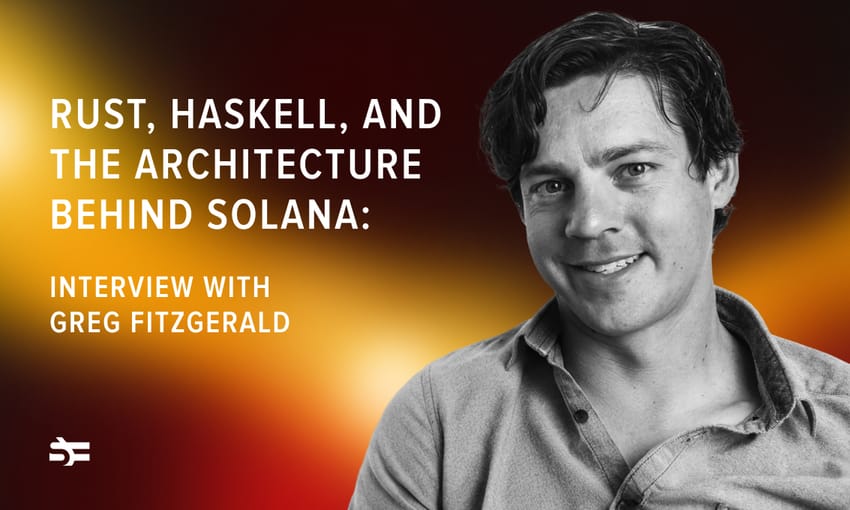

Why Solana Chose Rust: Greg Fitzgerald on Haskell & Systems | Serokell
In this interview, we speak with Solana cofounder Greg Fitzgerald about why Rust ultimately proved to be the right fit. We discuss how his background in C++, LLVM, and Haskell shaped Solana’s architecture, what functional programming contributed to the design of a high-performance blockchain runtime, and why Rust’s combination of strong types, memory safety, and low-level control worked particularly well for BPF and virtual-machine development.


Daml Smart Contracts on Canton: A Developer Guide | Serokell
Most blockchains are built around transparency: smart contracts, transactions, and state changes are visible to everyone. That works well in many cases, but it becomes a problem when organizations need to coordinate without exposing sensitive data.
The Canton Network takes a different approach. It is designed for privacy, data sovereignty, and interoperability, allowing participants to share only the information required for a given transaction.
Canton applications are commonly built with Daml, a strongly typed functional smart contract language centered on parties, authorization, contracts, and multi-party workflows.
In this article, we’ll introduce Canton and Daml, compare Daml with Solidity, and build a small banking application. Along the way, we’ll see how privacy and authorization requirements influence smart contract architecture.

Haskell in Production: Haskoin
In this edition of Haskell in Production series, we interview JP Rupp, the main developer of a set of Haskell libraries for Bitcoin and Bitcoin Cash. Read the interview to learn about the benefits of Haskell and why it is such a frequent choice for blockchain applications.
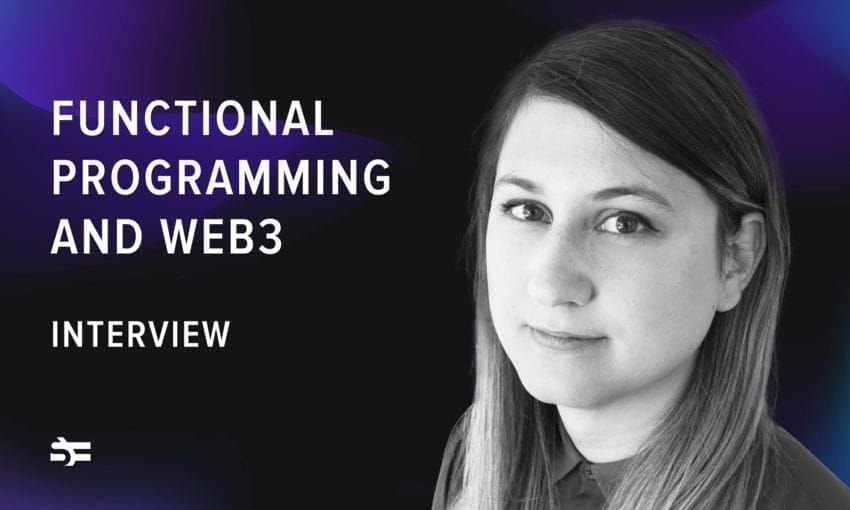

Functional Futures: Functional Programming and Web3 with Brooklyn Zelenka
Our first guest on the Functional Futures podcast was Brooklyn Zelenka, the co-founder & CTO of FISSION. Listen to our interview with her to find out more about functional programming, the Witchcraft library, and the good and bad sides of Web3.


Lorentz: Type-Safe Storage Migrations
In this article, we'll look at how you can make storage migratable in Lorentz, our Haskell eDSL for the Michelson smart contract language.


Lorentz: Type-Safe Upgradeable Storage
Once deployed, large-scale smart contracts can sometimes become outdated and require upgrades. In this part of our Lorentz series, we show how to make a smart contract with upgradeable storage in Lorentz.

Lorentz: Generating Documentation for Smart Contracts
In this article, we'll show how you can maintain Tezos smart contract documentation with ease by using Lorentz, our eDSL for Michelson smart contracts.

DAML: A Haskell-Based Language for Blockchain
What are the benefits of functional programming for smart contract development? Find the answer in our interview with Anthony Lusardi, a developer advocate at DAML.


Lorentz: Achieving Correctness with Haskell Newtypes
In this article, we will introduce you to the use of Haskell newtypes in Lorentz, the smart contract eDSL for Michelson.
Lorentz: Introducing Complex Objects with Haskell Generics
This is the second post in a series about Lorentz — a Haskell eDSL for the Michelson smart contract language. In this post, we will enrich Lorentz with additional functionality, adding objects with multiple fields.

Lorentz: Implementing Smart Contract eDSL in Haskell
Together with the TQ Group, we have been working on several tools that use Haskell to improve writing and testing Michelson code on Tezos. This is the first post in a series about one of them — Lorentz, a Haskell eDSL for Michelson smart contracts.
Blockchain vs. DLT: What's The Difference?
The terms “blockchain” and “distributed ledger technology (DLT)” are very often used as synonyms. Guess what? They're not.