Blog: Rust


Bringing Rust into Ubuntu at Scale: Interview with Jon Seager
When Ubuntu 26.04 LTS shipped, cp, mv, and rm still came from GNU coreutils. Security audits had uncovered race conditions in their Rust replacements, and the fixes weren’t ready in time. By Ubuntu 26.10, those last three utilities had moved to uutils.
Jon Seager, VP of Engineering at Canonical, explains how building Ubuntu itself helped the team find compatibility bugs and decide when to make the switch. We also discuss how to tell whether a Rust rewrite preserves the behaviour users rely on, and what an AI coding agent should be allowed to do inside a Linux sandbox.


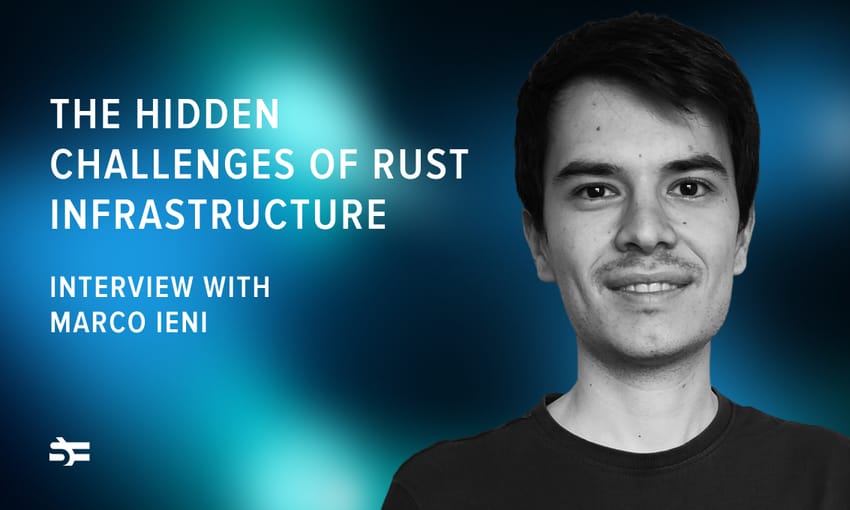

The Hidden Challenges of Rust Infrastructure: Interview with Marco Ieni
Rust’s infrastructure runs on limited engineering time. Saving compute can mean adding maintenance work, and reviewing contributions competes with keeping services running.
In this interview, Marco Ieni of the Rust Foundation explains how the team reduced CI costs and why it sometimes accepts duplicated work for a simpler system. We also discuss running untrusted code, infrastructure as code, release-plz, and what it takes to support Rust’s growing ecosystem.



Why Solana Chose Rust: Greg Fitzgerald on Haskell & Systems | Serokell
In this interview, we speak with Solana cofounder Greg Fitzgerald about why Rust ultimately proved to be the right fit. We discuss how his background in C++, LLVM, and Haskell shaped Solana’s architecture, what functional programming contributed to the design of a high-performance blockchain runtime, and why Rust’s combination of strong types, memory safety, and low-level control worked particularly well for BPF and virtual-machine development.

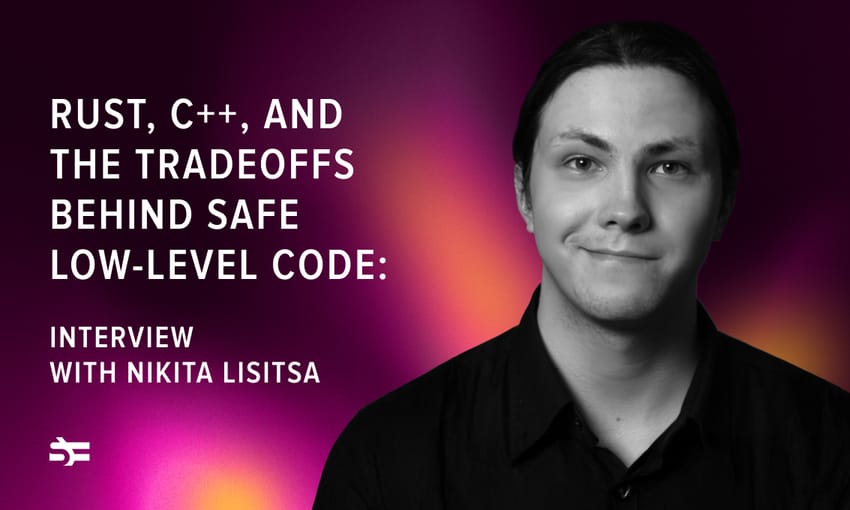
Rust, C++, and the Tradeoffs Behind Safe Low-Level Code: interview with Nikita Lisitsa
In this post, we interview Nikita Lisitsa about C++, Rust, systems programming, and game development.
We discuss whether C++ is still the default path into systems programming, where Rust fits in, and how both languages may coexist over the next decade. Nikita also shares his perspective on memory safety, language complexity, game engine design, real-time physics simulations, renderer abstractions, and the lessons he learned from shipping Costa Verde.
Article by Fedor Logachev
June 8th, 2026
11 min read


Rust in Production: JetBrains
In our Rust in Production interview series, we talk with developers and technical leaders who are shaping how Rust is built and used in practice..



Rust is Not a Functional Language
We at Serokell love Rust. We also love functional languages like Haskell and OCaml. However, there appears to be a bit of confusion as to whether Rust can be called a functional language, too.

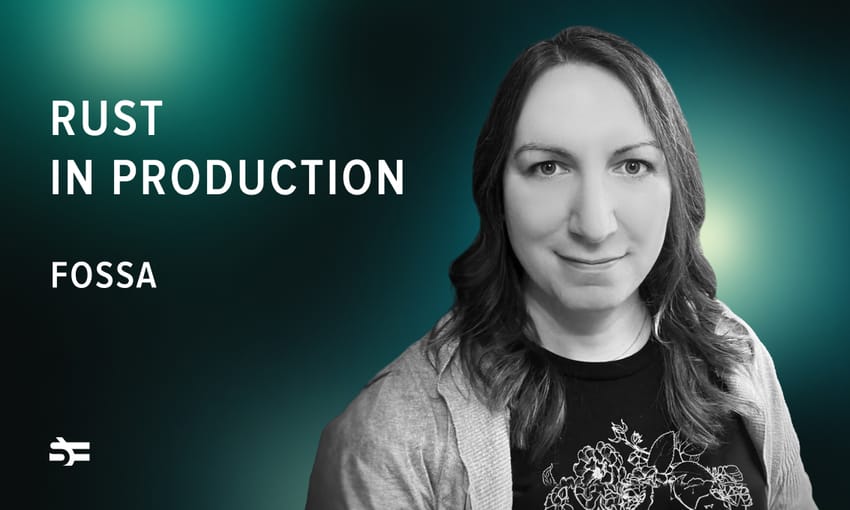

Rust in Production: FOSSA
In this interview from our Rust in Production series, we speak with Jessica Black, a senior software engineer at FOSSA, a developer-native open source management platform. Jessica has been working at FOSSA for over four years and has been on the Analysis team for the past two years. The Analysis team manages FOSSA CLI and FOSSA Broker, along with services that power more advanced capabilities like snippet scanning and vendored code matching.



Top Rust Libraries
The Rust programming language has been gaining more supporters in the developer community thanks to its focus on performance, safety, concurrency, and a rich ecosystem of libraries. In this blog post, we offer a concise overview of some noteworthy Rust libraries, selected based on their functionality and popularity among developers.


Rust Development Roadmap
Rust has been one of the top 15 most popular and loved programming languages over the past five years due to the incredible developer experience it offers and its flexibility. It boasts powerful features, transparent documentation, and an engaged and supportive community of contributors.


Rust for Haskell Developers
We love Haskell, but we also love learning new languages. In this article, we want to show how to use your Haskell knowledge to write Rust code.


Rust vs. Haskell
Even though Rust and Haskell are quite different languages, they are also surprisingly alike. If you know Rust, you have a head start with Haskell, and vice versa.


Get Started with Rust: Generics
With Rust generics, programmers can write general algorithms that work with arbitrary types, reducing code duplication and providing type safety. In this article, we show when and how to use them.